



Picture moving clips beat still shots online now. Whoever you are – maker, seller, boss, or just scrolling lots – shifting photos to motion pieces lifts how people respond. Tools powered by smart systems turn flat pictures into smooth sequences quick, no expert know–how needed.
Picture something still turning into movement, almost like magic – AI Image to Video makes that happen. This platform breathes life into flat images through smart analysis of shapes, colors, and depth. Motion appears where there was none, guided by algorithms trained on real–world actions. Instead of hours spent animating frame by frame, results come fast, often within moments. Click once, watch how stillness shifts into flow. What used to need expert skills now unfolds automatically behind the scenes. Users see snapshots become dynamic without touching complex software.
AI Image to Video Explained?
One picture can become moving footage through smart software that learns patterns. This method uses machine learning to add life to frozen scenes without hand–drawing each shift. Motion comes alive when systems guess how objects might flow over time. Rather than crafting every second by hand, computers simulate depth and direction. A single photo may unfold into seconds of animation with natural–looking changes. Algorithms study visuals to blend shifts smoothly from one state to another. From flat shots emerge clips shaped by digital imagination.
Now showing up everywhere, this tool helps people make polished videos even when they lack editing skills. From stories online to school handouts, it fits right into posts, ads, lessons, and home–made clips – thanks to its straightforward design.
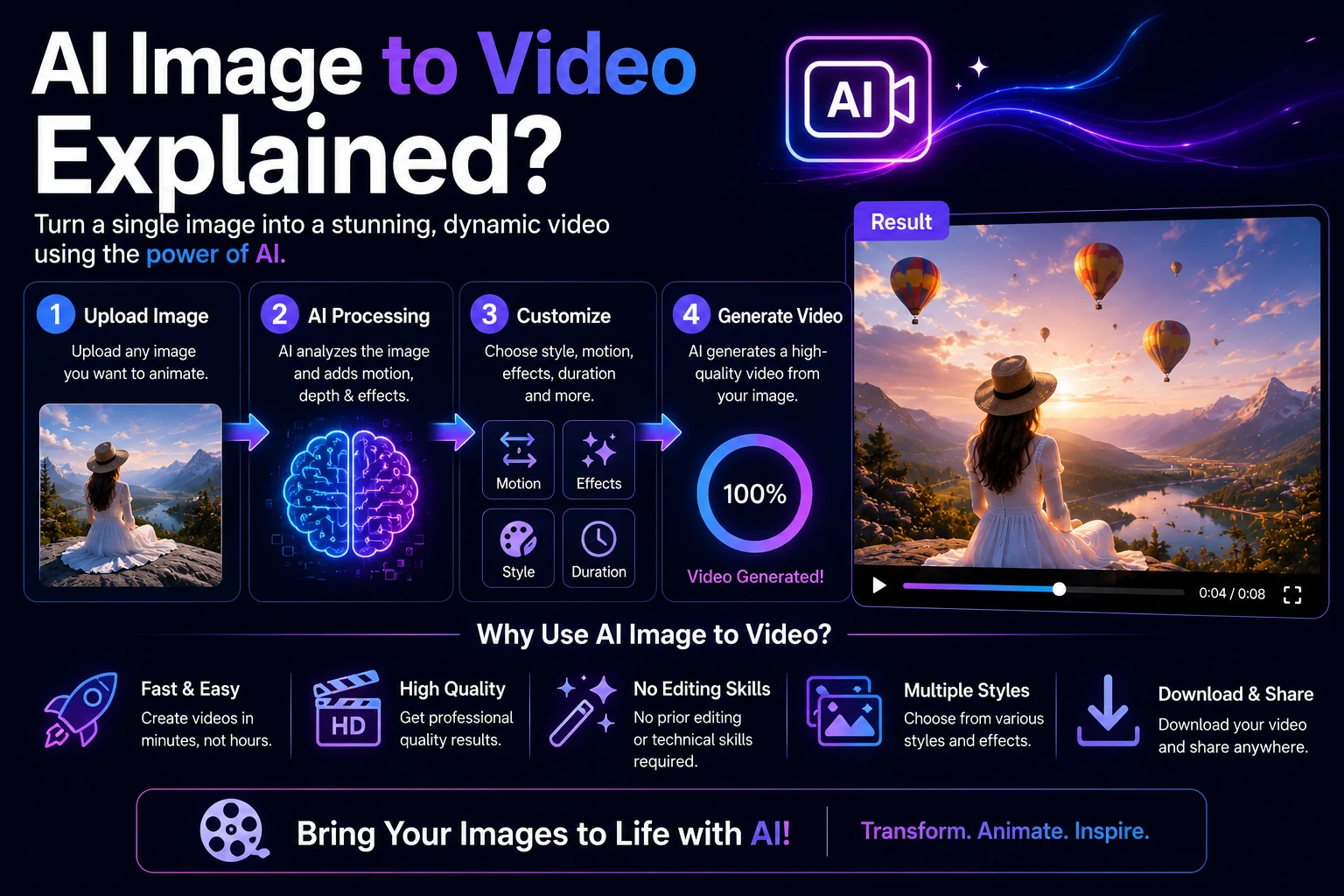
How AI Turns Images into Video:
Starting with a still picture, machines trained to see begin their work. From there, shapes like faces or skies get picked out one by one. After that, motion flows into each part, not all at once but piece by piece. Movement grows where nothing moved before, guided by patterns seen in countless videos. What was frozen now shifts softly, step by step.
Key steps include:
- Pictures get studied by computers to spot what’s inside them
- Depth estimation
- Motion generation
- Frame interpolation
- Video rendering
Out of stillness comes motion when these steps link up. One shifts into the next, quietly building flow. A frozen picture starts to breathe, then move. Through gradual layers, life appears on screen. Each phase leans on the one before. What was fixed now glides, shaped by rhythm. The result feels natural because timing fits just right.
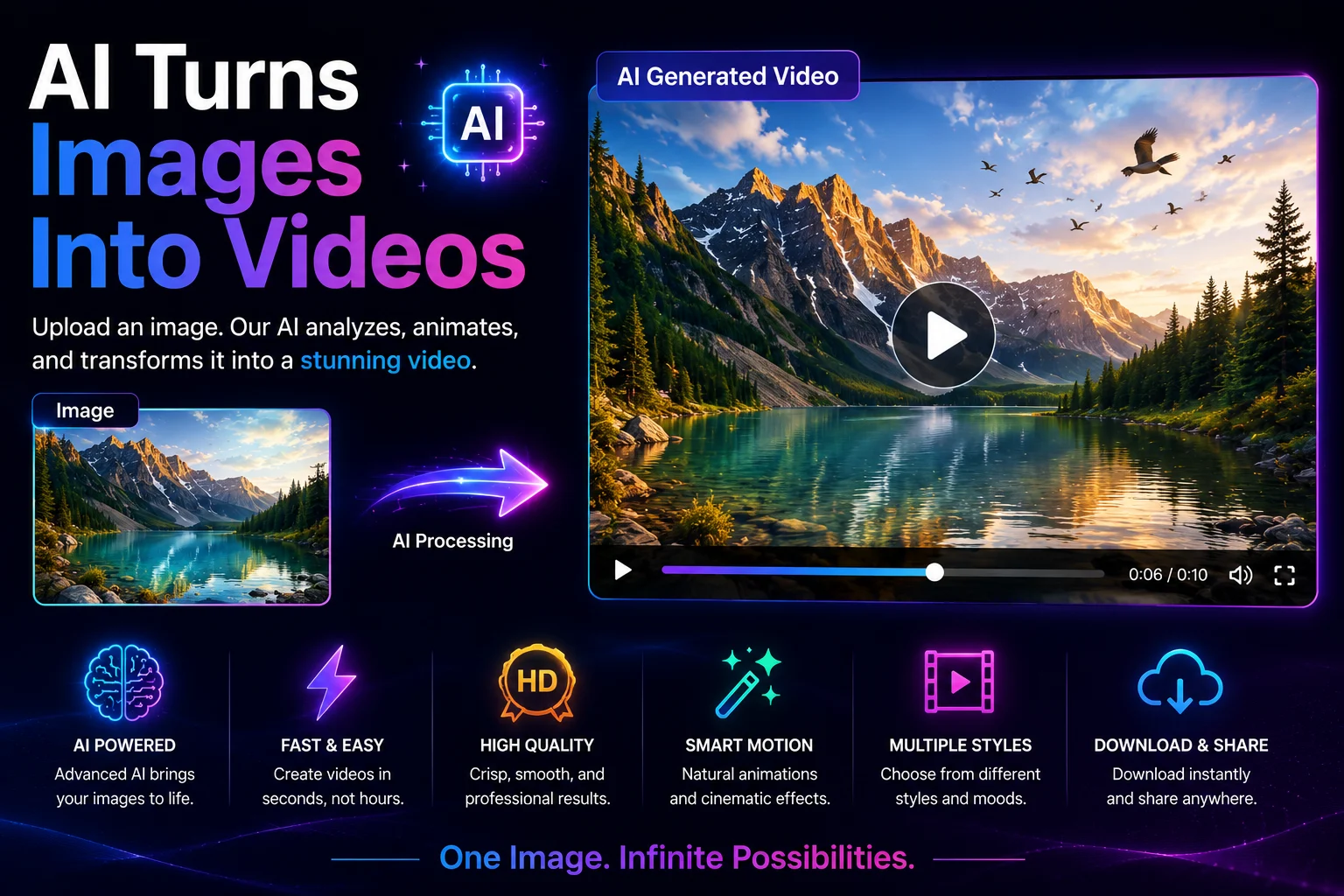
AI Turns Images Into Videos:
1. Saves Time:
Out of nowhere, a new way to make videos cuts the long wait. Instead of spending endless stretches editing frame by frame, machines now handle the heavy lifting – fast, quiet, done before you know it.
2. No Editing Skills Needed:
From a single picture, movement begins when technology takes over. Whether new or experienced, people can start by adding their image. The system turns stills into motion without needing extra steps.
3. Cost-Effective Solution:
Spending money on video editors might cost a lot. On the flip side, tools powered by artificial intelligence make it possible to build strong videos without emptying your wallet.
4. Improves Interaction on Social Platforms:
Out here, people just can’t help but share or pause longer for videos instead of flat images. That shift? It’s why computer-made films grab way more attention across spots like TikTok, Instagram, Facebook, right down to YouTube too.
5. Creative Flexibility:
Trying out various animation styles might lead someone to mix in unusual transitions. A shift in camera movement could bring along surprising visual effects. Some folks find their rhythm by swapping one effect for another. Unique results often come from blending motion with timing. Experimenting opens doors to fresh looks without following set paths.
Common Ways People Use AI to Turn Images Into Videos:
Social Media Marketing:
From flat pictures, companies now build lively clips that pull people in. These visuals shine a brighter light on what they sell. Motion grabs more eyes than stills ever could. A stronger presence follows when products move like stories. Attention sticks longer when things feel alive. What once sat quiet on screens now speaks without words.
Content Creation:
Pictures come alive when influencers turn them into moving clips. These short films grab attention without feeling forced. Clips built from stills travel fast across platforms. Creators find fresh ways to connect using simple frames. Motion adds depth where images once stood flat.
E-Commerce:
Online stores can showcase products through animated presentations that highlight features and improve customer experience.
Personal Memories:
Picture those old snapshots sitting in a drawer. Turning them into moving stories brings stills to life. A journey through places once visited plays out frame by frame. Moments frozen in time now flow like film. Cinematic touches shape how each scene feels. Slides shift with mood and rhythm instead of just clicking forward.
Educational Content:
Teachers and trainers can create visual learning materials by animating educational images and illustrations.
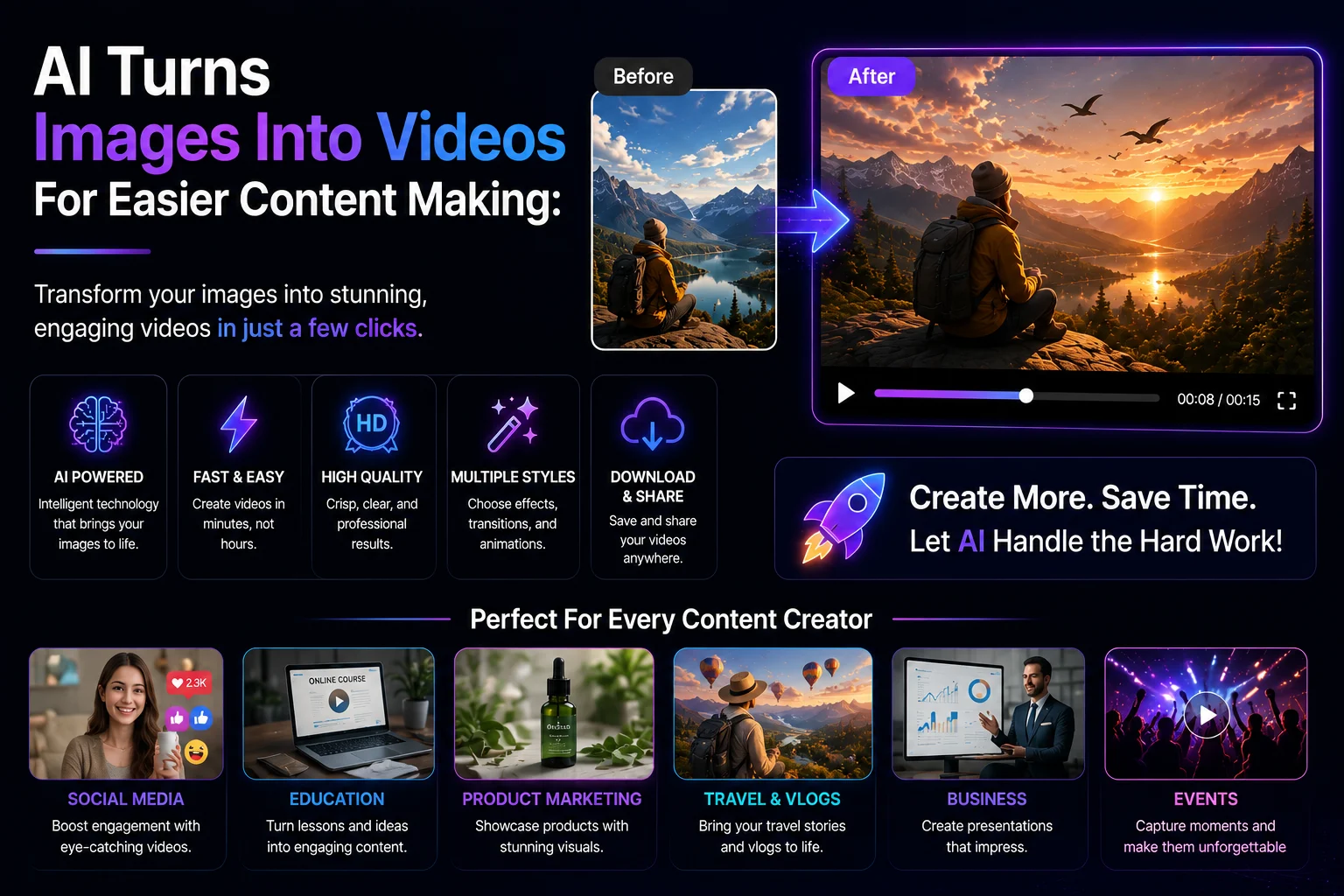
AI Turns Images Into Videos For Easier Content Making:
Out of still images, motion now grows without heavy lifting. When machines learn new tricks, making stuff takes less time. From one frame, a sequence emerges almost on its own. Photography slips into movement when tech steps in quietly. Effort fades behind results that look polished. Anyone can start, no special gear needed. Machines handle the hard parts piece by piece.
Now more than ever, quick videos drive interest across platforms. Tools that build clips using artificial intelligence fit right into this shift. Companies want impact without delay, so they turn to automated creation methods instead. Attention spans shrink, yet expectations rise – smart software helps bridge the gap quietly. Creators find fresh paths through machine–assisted editing, skipping old hurdles. Speed meets precision when algorithms shape visual stories fast.
Conclusion:
Out of still pictures, motion emerges – thanks to smart tools reshaping how visuals come alive. Turning snapshots into smooth clips cuts down effort while keeping quality high. For ads, classroom lessons, online posts, or home movies, fresh options pop up where once only experts went. Step by step, these systems grow sharper, weaving themselves deeper into how stories are built with pixels.
Read More:- Loudly: Revolutionizing Music Creation with Artificial Intelligence